

How Agencies Make HighLevel Free Using SaaS Mode
TLDR
- SaaS Mode allows you to resell GoHighLevel under your own brand.
- You set your own pricing tiers.
- 2 to 5 clients can cover your subscription cost.
- Everything above break-even becomes recurring profit.
- Requires Unlimited or SaaS Pro level access.
 Zoltan Juhasz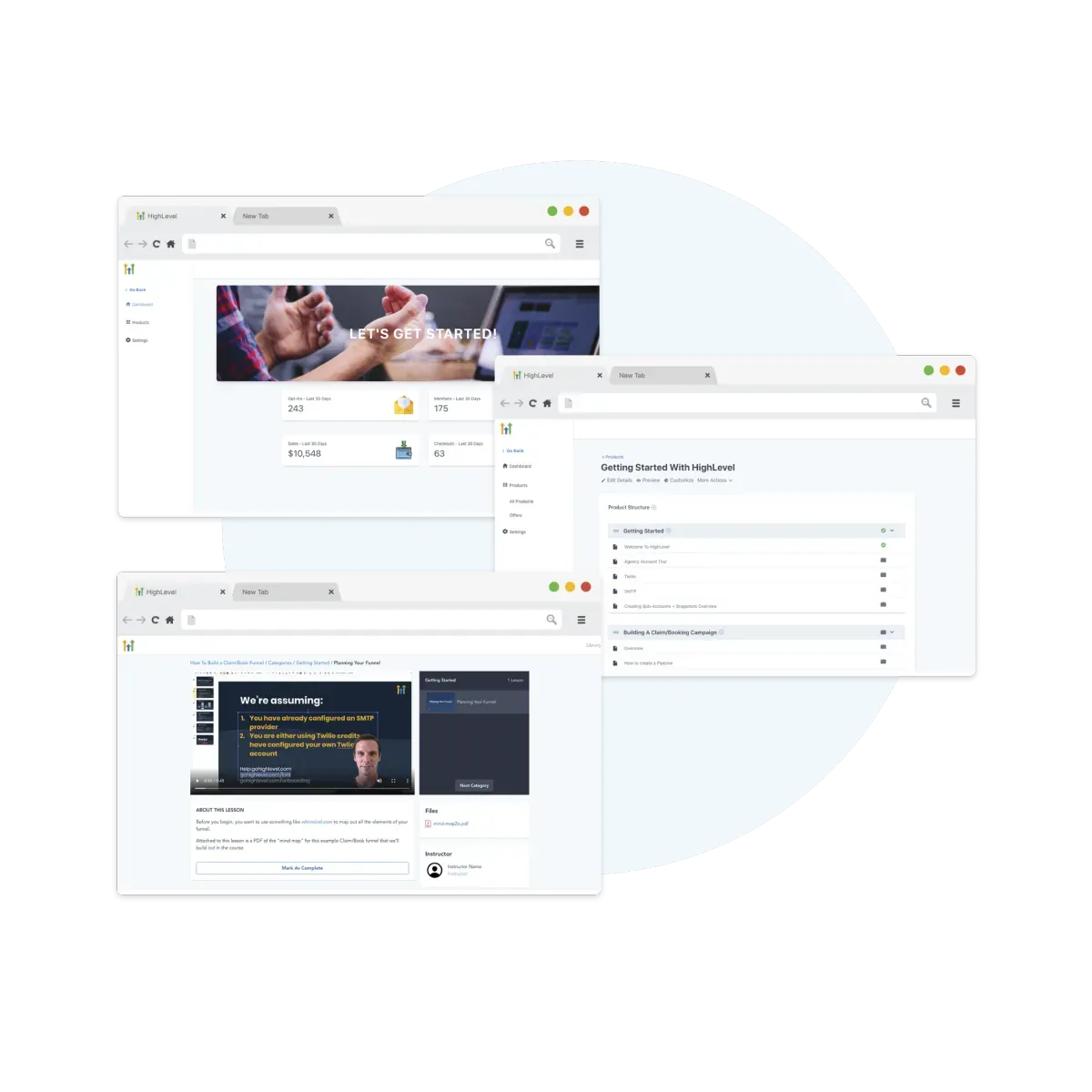
What Is GoHighLevel SaaS Mode?
GoHighLevel SaaS Mode lets agencies:
- Create pricing plans
- Automate client billing
- White-label dashboard access
- Control feature access per tier
- Generate recurring subscription revenue
Instead of charging only service fees, you sell software access.
✅ HighLevel 30-Day Free Trial
The Core Economics
Let’s assume:
SaaS Pro plan ≈ 497 USD monthly.
If you sell:
5 clients at 97 USD per month:
Revenue = 485 USD
Platform cost ≈ 497 USD
Break-even almost achieved.
At 6 clients:
Revenue = 582 USD
Profit = 85 USD monthly
At 10 clients:
Revenue = 970 USD
Profit ≈ 473 USD monthly
Now the platform is an income stream.
Typical Agency Pricing Tiers
Example structure:
| Plan | Monthly Price USD | Includes |
|---|---|---|
| Basic | 97 | CRM + funnels |
| Growth | 197 | CRM + automation + SMS |
| Pro | 297 | Full automation + reputation + support |
You control:
- Feature access
- Automation depth
- Support level
Why SaaS Mode Changes the Model
Traditional agency model:
Client pays for services.
You absorb software cost.
SaaS model:
Client pays for:
- Software access
- Automation infrastructure
- Optional service layer
Software becomes a recurring asset.
Who Should Use SaaS Mode?
Ideal For:
- Agencies serving local businesses
- Marketing consultants
- Automation specialists
- White-label SaaS builders
Not Ideal For:
- Solo business owners with one brand
- Freelancers without recurring client base
- Users unwilling to manage onboarding
Setup Plan – Step-by-Step
Step 1 – Choose SaaS Plan
Upgrade to SaaS-enabled tier.
Step 2 – Create Pricing Packages
Define:
- Entry tier
- Growth tier
- Premium tier
Keep structure simple at first.
Step 3 – Configure Stripe Integration
Automate subscription billing.
Step 4 – Create Snapshot Template
Build one standardized automation stack:
- Funnel
- Pipeline
- Email sequence
- SMS follow-up
Duplicate per client.
Step 5 – Onboard First 3 Clients
Focus on validation, not perfection.
Revenue Strategy Models
Model 1 – Software Only
Charge 97 to 197 USD monthly.
No marketing services.
High scalability, lower workload.
Model 2 – Hybrid Model
Software: 197 USD
Services: 500 to 1,500 USD
Higher revenue per client.
Model 3 – Automation Specialist
Sell:
- Lead capture system
- Follow-up automation
- Appointment booking system
Package as infrastructure.
Risk Considerations
- Client churn affects revenue.
- SMS usage costs vary.
- Requires onboarding process.
- Support workload increases as clients grow.
Scaling without systems creates chaos.
When Does It Make Sense Financially?
If you can close:
3 clients at 197 USD monthly:
Revenue = 591 USD
Platform cost ≈ 497 USD
Positive cash flow achieved.
Above that, profit compounds.
Comparison: Service-Only vs SaaS Hybrid
| Model | Predictability | Margin | Scalability |
|---|---|---|---|
| Service Only | Medium | Medium | Limited |
| SaaS Hybrid | High | High | Strong |
Recurring subscriptions increase business valuation.
FAQ – SaaS Mode
Do I need technical skills?
Basic CRM and automation understanding required. No coding necessary.
Is white-label mobile app included?
Available on higher tiers.
Can clients cancel anytime?
Yes, billing control is managed via Stripe.
Is SaaS Mode separate from Unlimited?
SaaS Mode requires SaaS-enabled plan, typically SaaS Pro.